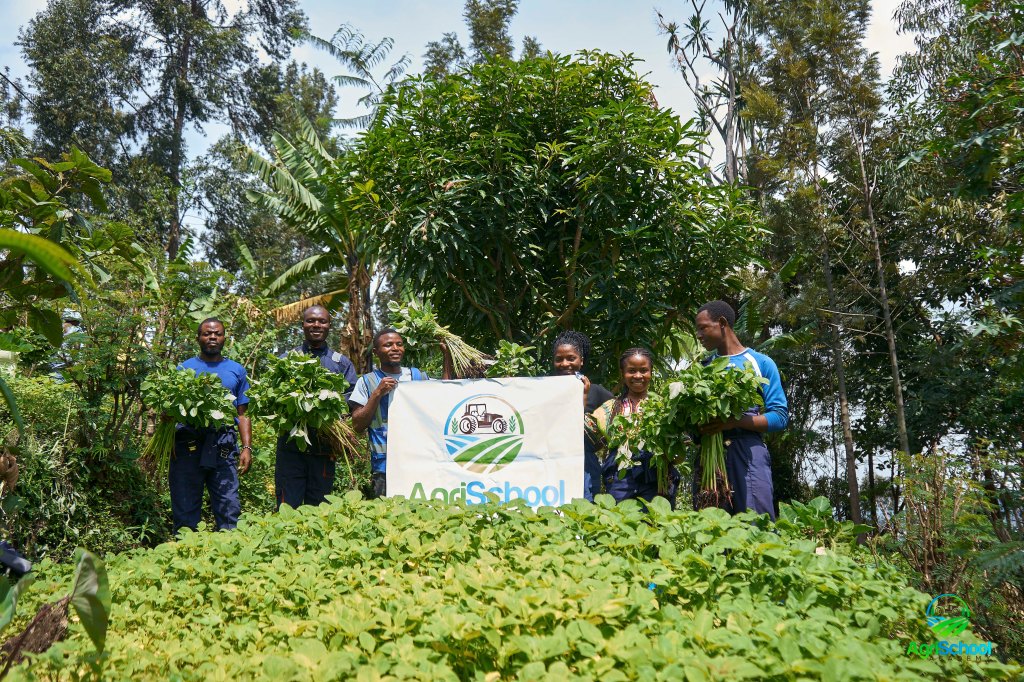
Un Avancée pour la Sécurité Alimentaire à Goma
La récente récolte d’Amarante INKA, cultivée par les étudiants de l’Agrischool Academy de HOPE LAND CONGO, marque un pas prometteur pour la sécurité alimentaire et l’agriculture durable à Goma. Après seulement un mois de culture, cette récolte témoigne de l’engagement des étudiants, des formateurs et de la communauté. Sous la direction des ingénieurs Célestin Mugarukira et Eunice Mvuyekure, cette initiative a permis de fournir des légumes frais et biologiques aux habitants de Goma, renforçant ainsi la résilience de la communauté face aux pénuries alimentaires.
Les faits
L’Agrischool Academy de HOPE LAND CONGO, un programme qui forme des jeunes aux pratiques agricoles, a récemment célébré sa première récolte d’amarante INKA. Cette plante, particulièrement adaptée au sol et au climat de Goma, a prospéré grâce à des méthodes de culture biologique. De la plantation à la récolte, tout le processus a été mené par des étudiants locaux, les formant aux compétences agricoles tout en renforçant l’approvisionnement alimentaire de la communauté. Désormais, des vendeuses de divers quartiers distribuent ce légume nutritif, rendant les produits biologiques plus accessibles et abordables.
Pourquoi l’Amarante INKA Est-Elle importante pour Goma ?
L’amarante, en particulier la variété INKA, est réputée pour sa résilience et ses valeurs nutritionnelles, en faisant un allié précieux contre la malnutrition. Facile à cultiver, demandant peu d’eau et riche en fer, protéines, et vitamines A et C, elle offre une option locale qui améliore la santé et la stabilité économique. Dans un contexte où l’approvisionnement dépend en grande partie des importations, la culture de l’amarante INKA à Goma est une avancée vers l’autonomie alimentaire.
Cette récolte n’est pas seulement une victoire pour la sécurité alimentaire, elle démontre également comment des pratiques agricoles durables peuvent transformer des vies. En cultivant des produits locaux comme l’amarante, la communauté gagne en indépendance et en résilience.


Ce que cela signifie pour les programmes d’agriculture durable
Cette réussite démontre l’impact immédiat que peuvent avoir des programmes agricoles locaux. En impliquant la communauté, l’Agrischool Academy équipe les jeunes avec des compétences en agriculture biologique, en durabilité et en entrepreneuriat. Grâce à ces connaissances, les étudiants contribuent non seulement à l’approvisionnement alimentaire de Goma, mais acquièrent aussi les outils pour une indépendance économique. La popularité de l’amarante INKA auprès des vendeuses locales prouve que les produits sains et abordables ont une réelle demande, ce qui permet à l’Agrischool Academy de continuer à se développer.
Cette initiative montre également l’importance de relier l’éducation agricole aux besoins du marché. La demande pour des produits locaux comme l’amarante ouvre la voie à de nouvelles cultures et à une croissance continue, créant un système alimentaire autosuffisant moins dépendant des importations.
Prochaines étapes : étendre l’impact
Suite à cette récolte réussie, l’Agrischool Academy prévoit d’élargir son programme pour inclure davantage de cultures résilientes, comme l’amarante INKA. Les prochaines étapes incluront :
- Accroître la production – Augmenter la surface cultivée pour approvisionner davantage de quartiers avec des produits locaux.
- Initiatives éducatives – Offrir une formation plus approfondie en gestion des cultures, conservation des sols et agriculture biologique.
- Sensibilisation communautaire – Partenariats avec davantage de vendeurs locaux et groupes communautaires pour distribuer l’amarante INKA et d’autres cultures locales.
À travers ces actions, HOPE LAND CONGO ambitionne de renforcer la chaîne d’approvisionnement alimentaire de Goma, avec la vision à long terme de bâtir un système agricole durable et résilient face aux défis économiques et environnementaux.
En conclusion, la première récolte d’amarante INKA à l’Agrischool Academy de HOPE LAND CONGO est une étape importante pour l’agriculture durable à Goma. Elle montre comment l’éducation agricole, combinée à l’implication communautaire, peut avoir un impact durable sur la sécurité alimentaire. Avec chaque récolte, l’Agrischool Academy plante les graines de l’espoir, de la résilience et de l’autosuffisance dans le cœur de Goma.
La communication Agrischool Academy – Hope Land Congo
*****English Version*****
🌱 Amaranth INKA harvest in Goma: A major milestone for food security and fight poverty
A Step forward for food security in Goma
The recent harvest of Amaranth INKA, grown by Agrischool Academy’s students from HOPE LAND CONGO, marks a promising development in Goma’s efforts toward local food security and sustainable agriculture. After just one month of planting, the yield showcases the commitment of students, trainers, and community supporters dedicated to this mission. Led by engineers Célestin Mugarukira and Eunice Mvuyekure, this initiative has brought fresh, organic vegetables directly into the hands of Goma’s residents, strengthening the community’s resilience in the face of food shortages.
What Happened
HOPE LAND CONGO’s Agrischool Academy, a program that provides hands-on agricultural training to local youth, recently celebrated its first Amaranth INKA harvest. This crop, well-suited for Goma’s soil and climate, has grown quickly under sustainable, organic practices. The entire process— from seed to table—has involved local students in every step, empowering them with agricultural skills and reinforcing the community’s food supply chain. Now, just a month after planting, vendors from across Goma are distributing this nutritious green, helping make organic produce more accessible and affordable.
Why Amaranth INKA Matters for Goma
Amaranth, particularly the INKA variety, is known for its resilience and high nutritional value, making it a powerful tool in the fight against malnutrition. This plant thrives in various climates, requires minimal water, and is packed with essential nutrients like iron, protein, and vitamins A and C. For Goma, where food security has been a persistent challenge, Amaranth INKA offers a locally grown, nutrient-rich option that can bolster both individual health and economic stability.
Moreover, this first harvest isn’t just a win for food security—it’s a testament to the potential of sustainable farming practices to transform lives. With Goma’s agricultural economy traditionally dependent on imports, locally sourced produce like Amaranth INKA brings independence and self-sufficiency closer to reality.
What this Means for sustainable agriculture programs
This achievement demonstrates how grassroots agricultural programs can have immediate impacts on food security. By engaging the community, Agrischool Academy equips young people with skills in organic farming, sustainability, and entrepreneurship. With these skills, students not only contribute to Goma’s food supply but also gain tools for economic independence. The success of Amaranth INKA serves as an inspiring example for similar programs aiming to merge education with practical solutions in agriculture.
Additionally, this initiative underscores the importance of connecting agricultural education with market needs. Amaranth INKA’s popularity with local vendors shows that there’s a demand for affordable, healthy produce, which opens doors for the Agrischool Academy to expand and diversify its offerings. As the program grows, it has the potential to create a self-sustaining food system that relies less on imports and more on local resources.
Next Steps: expanding the impact
With the success of this harvest, Agrischool Academy plans to expand its curriculum to include more resilient crops like Amaranth INKA. Looking ahead, the program will focus on:
- Scaling production – Increasing the number of crops grown and land cultivated to supply more neighborhoods with local produce.
- Education initiatives – Offering additional training in crop management, soil conservation, and organic farming practices.
- Community outreach – Partnering with more local vendors and community groups to distribute Amaranth INKA and other local crops.
Through these next steps, HOPE LAND CONGO aims to replicate this success and strengthen Goma’s food supply chain, with a long-term vision of building a sustainable and resilient agricultural system that can withstand economic and environmental challenges.
To closure, the first Amaranth INKA harvest at HOPE LAND CONGO’s Agrischool Academy is a significant win for sustainable agriculture in Goma. It highlights how agricultural education, combined with community involvement, can create lasting impacts on food security. With each harvest, Agrischool Academy is planting the seeds of hope, resilience, and self-sufficiency in the heart of Goma.
The communication Agrischool Academy – Hope Land Congo

 Agrischool Academy Congo